
 PhD Candidate, Information System, Tilburg University, the Netherlands
Feiyang (Amber) Xu is currently a PhD candidate in the Information Systems & Operations Management department at TiSEM.
Her research interests lie in digital platforms and artificial intelligence, with a focus on technological innovation and strategic management. One theme of her work examines the impact of generative AI assistants on online communities of open-source projects, where users share knowledge and help each other maintain the integrity of the projects.
Warning
Problem: The current name of your GitHub Pages repository ("Solution: Please consider renaming the repository to "
http://".
However, if the current repository name is intended, you can ignore this message by removing "{% include widgets/debug_repo_name.html %}" in index.html.
Action required
Problem: The current root path of this site is "baseurl ("_config.yml.
Solution: Please set the
baseurl in _config.yml to "Education
-
Tilburg UniversityInformation System
Ph.D. StudentMay. 2024 - present -
 Utrecht UniversityM.A. in Energy ScienceSep. 2016 - Jul. 2018
 -
 Waseda UniversityB.S. in Civil and Environmental EngineeringSep. 2011 - Jul. 2016
Honors & Awards
-
CIST Best Student Paper Nomination2025
-
Tilburg CentER PhD Scholarship2024
-
Utrecht Excellent Scholarship (covers the tuition fee plus living expense)2016
-
Okuma Memorial Scholarship (covers the tuition fee)2011
News
Selected Publications View All
AI-assisted Programming May Decrease the Productivity of Experienced Developers by Increasing Maintenance Burden
Feiyang Xu, Poonacha K. Medappa, Murat M. Tunc, Martijn Vroegindeweij, Jan C. Fransoo
Conference on Information Systems and Technology (CIST) 2025
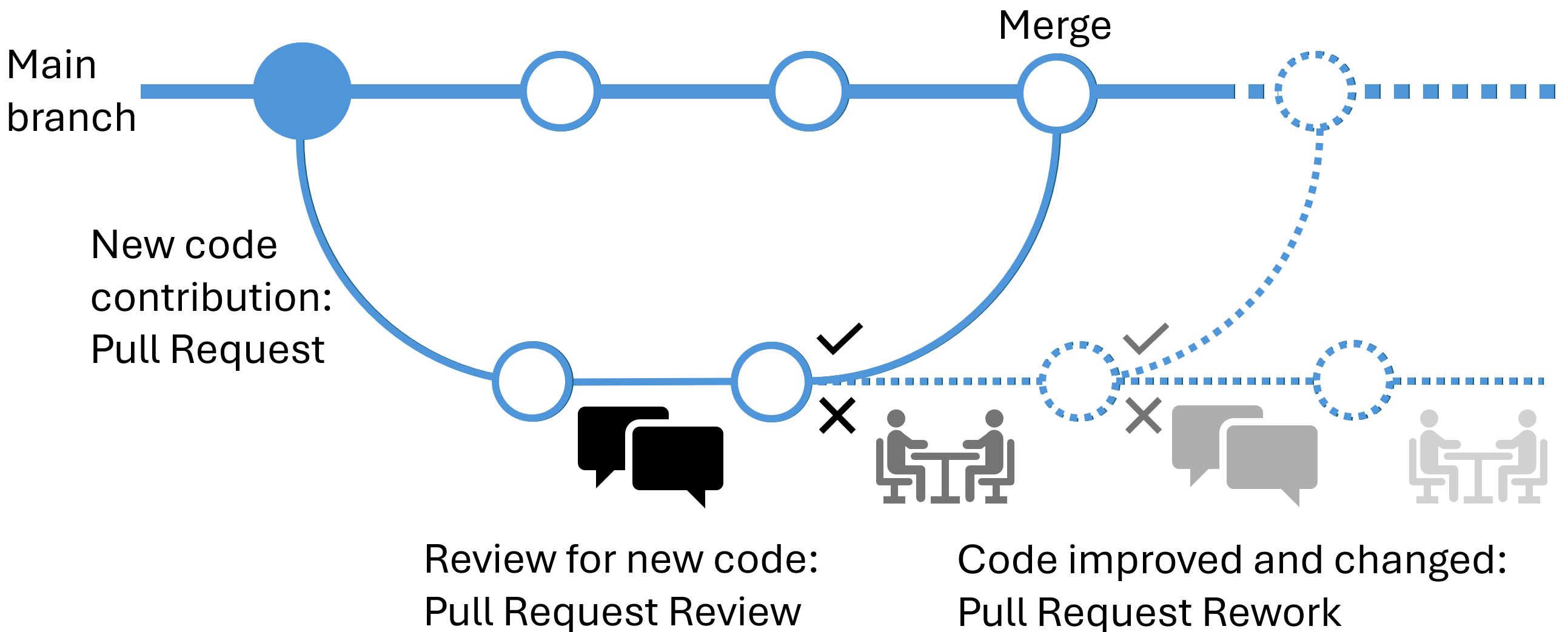
Generative AI solutions like GitHub Copilot have been shown to increase the productivity of software developers. Yet prior work remains unclear on the quality of code produced and the challenges of maintaining it in software projects. If quality declines as volume grows, experienced developers face increased workloads reviewing and reworking code from less-experienced contributors. We analyze developer activity in Open Source Software (OSS) projects following the introduction of GitHub Copilot. We find that productivity indeed increases. However, the increase in productivity is primarily driven by less-experienced (peripheral) developers. We also find that code written after the adoption of AI requires more rework. Importantly, the added rework burden falls on the more experienced (core) developers, who review 6.5% more code after Copilot’s introduction, but show a 19% drop in their original code productivity. More broadly, this finding raises caution that productivity gains of AI may mask the growing burden of maintenance on a shrinking pool of experts.
AI-assisted Programming May Decrease the Productivity of Experienced Developers by Increasing Maintenance Burden
Feiyang Xu, Poonacha K. Medappa, Murat M. Tunc, Martijn Vroegindeweij, Jan C. Fransoo
Conference on Information Systems and Technology (CIST) 2025
Generative AI solutions like GitHub Copilot have been shown to increase the productivity of software developers. Yet prior work remains unclear on the quality of code produced and the challenges of maintaining it in software projects. If quality declines as volume grows, experienced developers face increased workloads reviewing and reworking code from less-experienced contributors. We analyze developer activity in Open Source Software (OSS) projects following the introduction of GitHub Copilot. We find that productivity indeed increases. However, the increase in productivity is primarily driven by less-experienced (peripheral) developers. We also find that code written after the adoption of AI requires more rework. Importantly, the added rework burden falls on the more experienced (core) developers, who review 6.5% more code after Copilot’s introduction, but show a 19% drop in their original code productivity. More broadly, this finding raises caution that productivity gains of AI may mask the growing burden of maintenance on a shrinking pool of experts.